
DG Homes & Remodeling serves Rice, MN with home remodeling built around safety and accessibility. Rice sits inside our 30-mile service radius from St. Cloud, so we handle kitchen, bathroom, and whole-home updates that help you stay in your house as you age. This page focuses on aging-in-place: changes that lower fall risk, improve movement through the home, and address hazards common to central Minnesota.
If you are weighing a remodel against moving, concerned about winter damage, or trying to plan a safer bathroom, the sections below lay out the factors specific to Rice and the remodeling process.
Deciding Between Remodeling or Moving in Rice
A remodel keeps you in a home you know. Buying a different property in Rice or building new means paying for land, a new mortgage, and the cost of leaving equity behind. Remodeling adapts the structure you already own.
Some Rice homes cannot be modified to meet long-term safety needs. A house with a failing foundation or structural framing that cannot carry wider openings may cost more to fix than to rebuild. If load-bearing walls cannot be moved without major underpinning, the project edges toward a teardown. A contractor can assess this during a measured survey.
Local land and existing home values in Rice shift with the regional market. We do not publish those figures because they change. Compare recent sales of similar homes and empty lots before assuming a new build is cheaper. The gap between the cost of a targeted accessibility remodel and the cost of a new home often decides the choice.
Aging-in-place feasibility depends on layout. A single-story home with a bedroom and bathroom on the main floor is easier to adapt than a strict two-story. Look at door widths, hallway turns, and whether a ramp can reach the main entry. If the home already has a first-floor space that could become a master suite, the remodel stays smaller.
Minnesota-Specific Risks and Safety Hazards
Central Minnesota winters create failure modes that threaten safety. Improper vapor barriers and insufficient insulation let warm indoor air condense in the roof deck. That builds ice dams. Ice dams force water under shingles, rot wood, and grow mold. A remodel must address the building envelope, not just the visible interior.
Finishing a basement without moisture control is a common mistake in this region. Groundwater and high water tables push dampness through concrete. Without drainage and vapor management, finished basement air quality drops. For older adults, mold and mildew sensitivity makes this a direct health hazard.
Covering water stains with paint or cosmetic fixes hides the leak but not the damage. The stain signals an active path for moisture. In a senior household, that path can worsen breathing problems. Open the wall, find the source, repair it, then finish.
Slip-resistant flooring and heated entryways matter in Rice winters. Snow and ice get tracked inside. A smooth tile entry becomes a fall risk. Textured flooring and a heat source that keeps the threshold dry reduce accidents. Plan these details during the remodel, not after a fall.
Cost Ranges for Aging-in-Place Updates
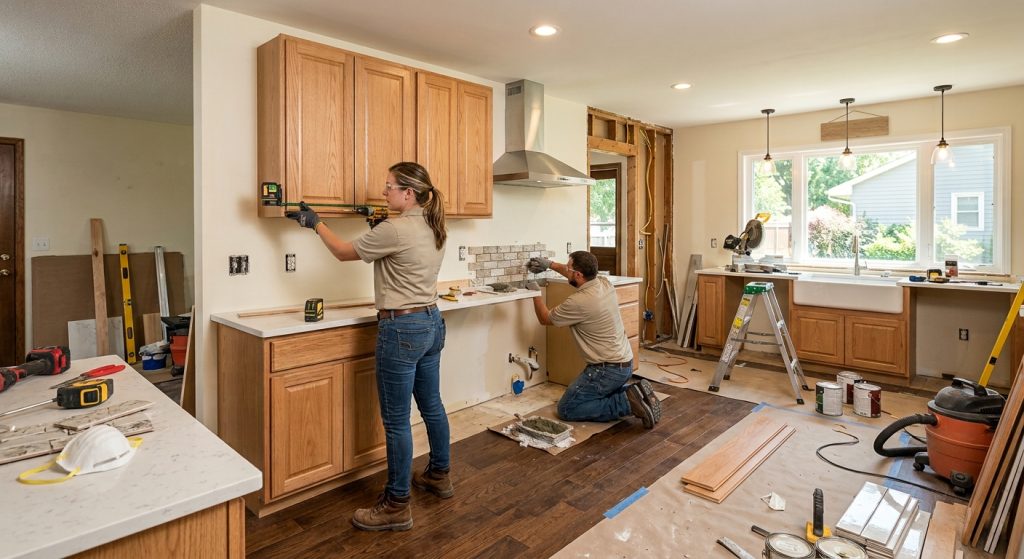
We do not list fixed prices because each Rice home differs. An accessibility-focused bathroom with a zero-entry shower costs less than a full gut with relocated plumbing. A kitchen with pull-out cabinets and lowered counters costs less than moving walls and rerouting gas lines.
Cost drivers in the Rice labor market include specialized materials such as reinforced shower pans and wider pre-hung doors. Skilled labor for structural changes adds expense. Permit fees and any required inspections add to the bottom line but vary by project scope.
A “safety update” means grab bars, railings, and improved lighting. A full remodel means changing layout, systems, and finishes. The first is a smaller budget item; the second is a larger investment. Request an itemized estimate that separates labor, materials, permits, and disposal so you can set a realistic number.
The Remodeling Timeline and Living Through It
The sequence starts with first contact. We schedule a measured survey of the home. Next comes a design draft showing the proposed changes. Then an itemized estimate. After you approve, we submit permits to the city. Demolition follows. Rough-in covers framing, plumbing, and electrical. Finish work adds surfaces and fixtures. A punch list closes out leftover items at final walkthrough.
Rice winters slow some steps. Cold temperatures affect adhesive curing and concrete work. Snow limits exterior access for material delivery. Schedule around the season where possible.
Kitchens and bathrooms become unusable during their phase. Plan a temporary cooking and hygiene space. For a senior occupant, keep a clear path to a safe room away from dust and noise. Seal off construction zones with plastic sheeting.
Clarify who prepares the site. The contractor should protect the home from the elements and contain debris. Ask before the job starts who sets up barriers and who cleans daily.
Rice Permitting and Code Requirements
The City of Rice requires permits for common aging-in-place projects. Moving load-bearing walls, upgrading electrical for accessibility equipment, and changing plumbing all trigger a permit. The city schedules inspections at defined stages.
A contractor can pull permits, or a homeowner can. The permit application must match the work. Inspections confirm the rough-in and final results meet code.
Skipping permits risks a stop-work order. Unpermitted work can fail a future resale inspection and force costly correction. If the remodel expands the footprint or changes drainage, septic adjacency and well setback rules may apply. Check with the city building department before designing.
Verifying a Remodeler’s Qualifications
Ask for a valid Minnesota contractor license number. Confirm the remodeler carries liability insurance. These are checkable facts, not opinions.
Request the written warranty terms for structural and finish work. Read what is covered and for how long. Do not rely on a verbal promise.
Review a portfolio of completed Rice remodels. Look for evidence of accessibility projects like widened doors or roll-in showers. Local work shows familiarity with city inspectors and climate needs.
Ask how subcontractors are vetted. Everyone entering the home should be insured and qualified. The main contractor should confirm this in writing.
Frequently Asked Questions
Who is this page for?
Rice, MN homeowners who want to remain in their current house safely as they age. It speaks to people comparing a remodel with moving and to those planning specific updates like a zero-entry bath or accessible kitchen.
What is the primary angle?
Aging-in-place safety. The page treats remodeling as a way to reduce fall risk, manage Minnesota hazards, and adapt a home’s layout for long-term use.
How should the page be structured?
It opens with a lead answering the title, then moves through six sections: deciding between remodeling or moving, state-specific risks, cost planning, timeline and living through construction, Rice permitting, and contractor vetting. A FAQ closes it.
Two facts true of Rice that affect this service: Rice falls within the 30-mile St. Cloud radius that DG Homes & Remodeling serves, so the business can staff and reach projects locally. Rice winters bring snow and ice that make slip-resistant entryways and weather-delayed schedules a direct part of any remodel plan.