
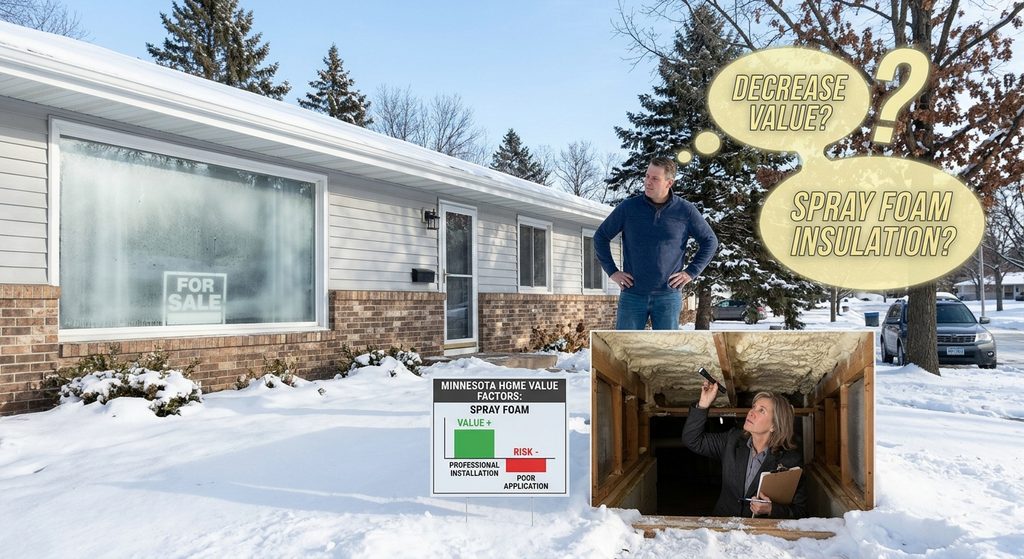
Spray foam insulation does not automatically decrease home value in Minnesota. Properly installed foam usually increases value by cutting energy bills and making the house easier to sell. A bad installation can lower value sharply because of moisture problems, odor, and costly removal.
Value here means both resale price and how fast the home sells. In Minnesota’s cold Climate Zone 6, correct application matters more than the material itself.
The Verdict on Spray Foam and Home Value
Spray foam typically adds value through energy efficiency. Buyers in Minnesota care about heating costs, and a tight building envelope helps.
The material can decrease value if applied wrong. The loss comes from repair cost and buyer hesitation, not from the foam itself.
Marketability is part of value. A home with documented, clean foam sells faster than one with a suspicious attic.
In this state, the return on investment depends on proper application for the local climate. Foam that works in a mild zone may fail in a region with hard freezes.
Why Spray Foam Can Decrease Value
Failure Modes That Destroy Value
Improper curing leaves foam that off-gases chemicals. The smell lingers and alarms buyers.
Shrinkage creates air gaps after the job looks done. Those gaps let heat escape and moisture enter.
Spraying foam against roof decking without correct detailing traps moisture in the wood. Rot follows.
Reaction From Inspectors and Buyers
A botched spray foam job is a red flag during home inspection. Many inspectors in Minnesota spend extra time in attics and crawl spaces looking for it.
Buyers often ask for price reductions or walk away. The fear is hidden damage they cannot see.
Removal Cost
Removing spray foam costs more than removing fiberglass or cellulose. It adheres to surfaces and must be scraped or dissolved.
If a fix is needed, the net value drops by the remediation cost. That loss is unique to foam.
Closed-Cell Risks in MN Summers
Closed-cell foam applied too thickly holds heat and can crack. High humidity during application causes poor adhesion.
Minnesota summers with sudden humidity spikes create these conditions. A contractor who ignores the weather creates a future problem.
Selling a Minnesota Home with Spray Foam
You can sell a home with spray foam. The sale goes smoother with documentation and a clean inspection.
Minnesota home inspectors specifically check attics and crawl spaces for foam coverage. They look for blocked vents and signs of moisture.
Lenders and appraisers may hesitate if the foam lacks permits. Paperwork proving the work met code solves most doubts.
State disclosure rules require mentioning known insulation modifications and moisture issues. Hiding a past foam failure can void a sale later.
Cost vs. Return on Investment
Spray foam is a premium material. The cost to insulate a 2,000 square foot home varies with the type used and the job complexity.
Open-cell and closed-cell have different prices. Both run higher than fiberglass batts.
Energy savings in Minnesota’s long heating season can pay back part of the cost. The period depends on fuel rates and how leaky the old house was.
The increase in resale value may not cover the full installation bill. Often the real gain is lower utility bills while you live there.
Over-insulating wastes money. Adding foam beyond what the building needs does not raise value proportionally.
Minnesota-Specific Risks and Requirements
Extreme freeze-thaw cycles stress foam adhesion. Repeated expansion and contraction can loosen beads from framing.
Minnesota building code requires high insulation levels in attics and walls. Spray foam meets those levels when installed at the right thickness and with proper air sealing.
Ice dams form when soffit vents are blocked by foam. Water backs up under shingles and damages the roof.
Air sealing matters in Minnesota drafts. Foam stops air movement better than fiberglass, but only if the seams are complete.
How to Identify a Value-Destroying Installation
Watch for visual signs of failure:
- Browning or yellowing of foam, which indicates heat or UV damage
- Gaps between studs or along edges
- A distinct chemical odor that does not fade after curing
A proper Minnesota installation includes a thermal barrier such as drywall over exposed foam. The thickness matches the climate need.
If you see these signs, hire a professional energy auditor or insulation contractor for an assessment. They can test moisture and adhesion.
Decision Guide: Install, Keep, or Remove
Use this checklist for existing foam:
- Is there any odor or discoloration? If yes, get it assessed.
- Are attic vents clear and wood dry? If yes, leaving it may be fine.
- Do you have permits and installer records? If no, gather them before listing.
New spray foam makes financial sense during a deep remodel where walls are open. It pairs well with new mechanical systems.
If you find moisture damage from failed foam, repairs may require a licensed remodeler to replace rotten wood or drywall. Homeowners within 30 miles of St. Cloud can contact DG Homes & Remodeling for kitchen and bathroom remodeling tied to that work.
If you suspect current insulation is lowering value, schedule an assessment this week. Watch for new stains or smells over the next month.
FAQ
Why are people removing spray foam insulation? They remove it because of bad curing, moisture trapping, odors, or failed inspections. Removal is also done before a remodel that changes the wall structure.
How much does it cost to spray foam a 2000 ft house? Cost depends on the foam type, home layout, and local labor. Spray foam is a premium material, so expect a higher number than fiberglass. Request written quotes from insulation contractors for exact figures.
Can you sell a home with spray foam insulation? Yes. Sales succeed when the foam is documented, installed correctly, and free of moisture signs. Lack of paperwork or visible failure makes the sale harder.
Is there a downside to spray foam insulation? The downside appears only with incorrect installation. Poor jobs cause off-gassing, trapped moisture, and expensive removal. Correct jobs avoid those issues.